Family Activities
Farmers Markets and Local Food: A July Fourth Guide
A guide to farmers markets and local food for July Fourth, with practical tips on what to buy, how to plan, and why seasonal food matters.
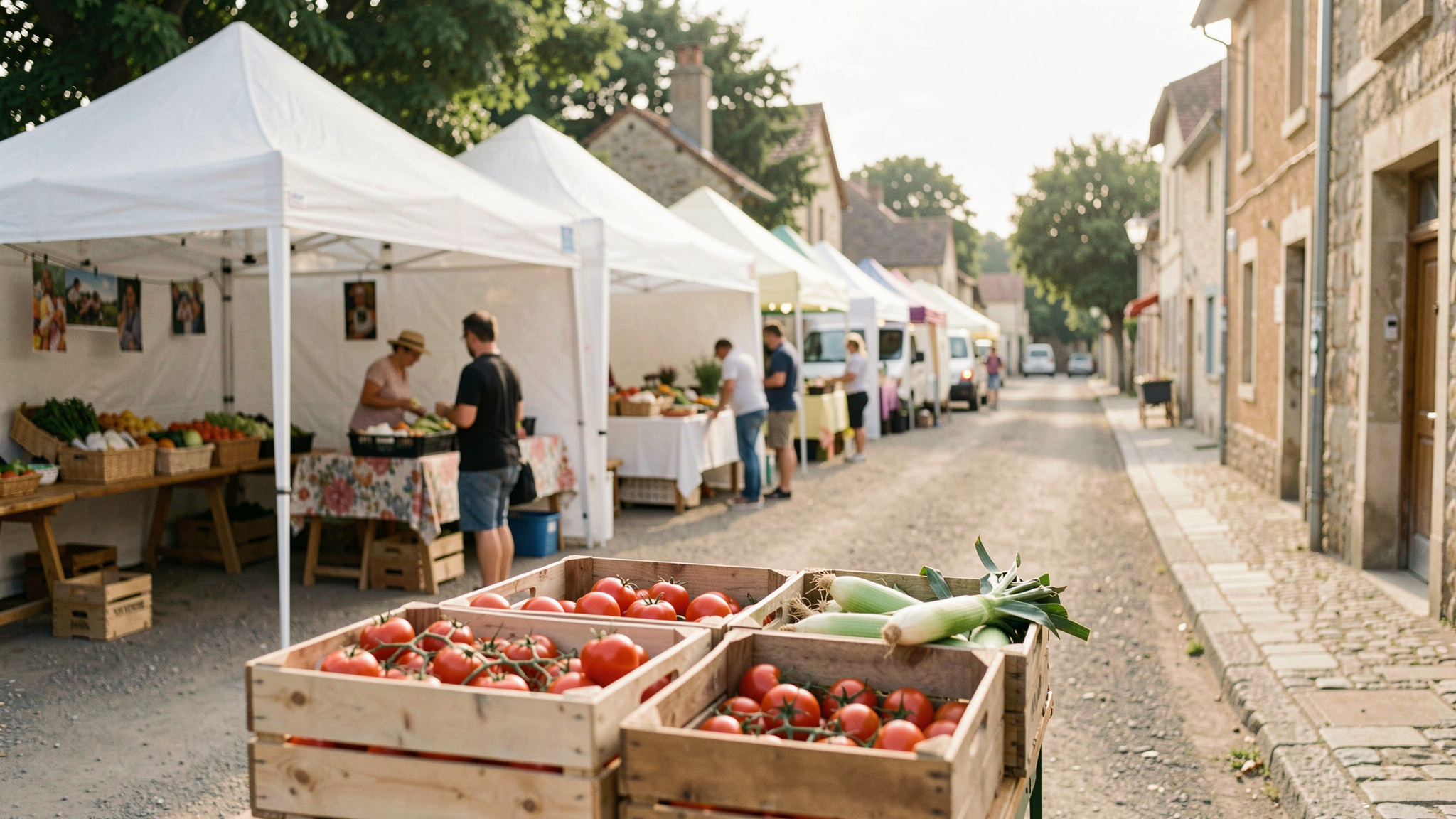
Farmers markets and local food matter on the Fourth of July because they put seasonal ingredients within reach of anyone planning a cookout. A market stall gives you tomatoes that taste like tomatoes, corn picked that morning, and bread from a bakery a few miles away. The result is a table that reflects a place, not a supply chain.
Why buy local food for the Fourth of July?
Local food shortens the distance between the field and the plate. Produce sold at a farmers market is often harvested within a day or two of the sale, so flavor and texture hold up better than items shipped long distances. For a holiday meal, that difference shows up in small ways: a cucumber that snaps, a peach that drips, a loaf that still has a crust.
Buying locally also keeps money in the region. Vendors pay stall fees, hire neighbors, and buy supplies from nearby businesses. A single market morning can circulate dollars through a town several times before the day ends.
There is a practical angle too. Market vendors know their products. They can tell you which tomato is best for slicing and which for sauce, how to store greens, and when a fruit will be ripe. That knowledge is free and usually comes with a sample.
For readers who want to see how another region documents its own market culture, an independent notebook on central Maine covers the Sunday market in Belgrade Lakes village, the farms behind the tables, and the makers who fill the stalls. It is a useful comparison for anyone tracking how local food systems describe themselves.
What should you buy at a farmers market for a cookout?
Start with what is in season. In early July across much of the Mid-Atlantic and Northeast, that means sweet corn, tomatoes, zucchini, cucumbers, berries, and stone fruit. Leafy greens may be bolting in the heat, so choose heartier options like kale or chard.
For the grill, look for:
- Corn on the cob, still in the husk
- Tomatoes for slicing and for a quick salsa
- Zucchini and summer squash for skewers
- New potatoes for a foil packet
- Peaches or plums for a grilled dessert
For sides and snacks, add a loaf of sourdough or rye, a jar of pickles, and a wedge of sharp cheese. If the market has a creamery, buy ice cream for later. If it has an egg stand, buy a dozen for deviled eggs.
Meat requires more planning. Not every market has a butcher, and holiday weekends can empty a stall by mid-morning. If you want sausages, ribs, or a chicken for the grill, arrive early or pre-order when the vendor offers it.
How do you plan a market run before the holiday?
A market run works best with a list and a route. Check the market schedule first. Some markets move to a different day or add hours around the Fourth. Confirm the location, since summer markets sometimes set up in a park or a parking lot rather than their usual spot.
Arrive in the first hour. Vendors bring limited quantities, and the best produce goes first. Bring cash, even if most stalls take cards, because small vendors appreciate it and some still prefer it. Carry a cooler in the car for anything that should stay cold.
Walk the whole market before buying. Prices and quality vary from stall to stall, and a quick lap helps you compare. Ask vendors what they picked that morning. The answer tells you what is freshest.
Plan the menu around what you find, not the other way around. If the corn looks good, build the meal around corn. If the tomatoes are perfect, make a tomato pie or a big salad. Flexibility is the point of shopping this way.
What does local food mean for a community?
A farmers market is a public space as much as a store. It gives growers a direct outlet, gives shoppers a reason to walk a main street, and gives neighbors a weekly chance to meet. In small towns, the market often becomes a social anchor, a place where people run into each other and catch up.
The economic effect is modest but real. Vendors earn a larger share of the retail price than they would selling through a distributor. That money tends to stay close to home, spent at local businesses and on local services.
The environmental effect is also modest but real. Shorter transport distances reduce fuel use and packaging. Seasonal eating means fewer resources spent on storage and refrigeration. No single market changes the food system, but a network of them shifts habits over time.
How do you keep market food fresh until the Fourth?
Storage matters as much as shopping. Here is a short guide:
- Corn: keep it in the husk in the refrigerator. Use it within two days for the sweetest flavor.
- Tomatoes: store at room temperature, out of direct sun. Refrigeration dulls flavor.
- Berries: do not wash until you are ready to eat them. Spread them in a single layer in the fridge.
- Greens: wrap in a damp towel or a paper bag and refrigerate.
- Bread: keep it in a paper bag on the counter for a day, then slice and freeze what you will not use.
- Cheese: wrap in parchment or cheese paper, not plastic, and keep it in the warmest part of the fridge.
If you buy meat or dairy, keep it cold on the ride home. A cooler with ice packs handles the trip. Once home, refrigerate immediately.
What if you cannot get to a market?
Not everyone can reach a farmers market on a holiday weekend. Farm stands, CSAs, and co-ops fill some of the gap. Many farms sell directly from their property, and some offer pickup days that include the Fourth.
Grocery stores also carry local products, though labeling varies. Look for state-grown programs or signs that name the farm. Ask the produce manager which items come from within the region.
Community gardens and neighbors with extra zucchini are another option. In many towns, the holiday is a moment when gardens produce more than one household can eat. A knock on a door or a post in a neighborhood group often turns up free vegetables.
The point is not to be strict about sourcing. It is to buy what is fresh, in season, and close when you can. A cookout built on a few good local ingredients will taste better than one built entirely on shipped produce.
A note on timing and tradition
The Fourth of July is a fixed date, but the food around it is not. What is ripe on July 4 in York, Pennsylvania differs from what is ripe in Maine or Georgia. That variation is part of the holiday's character. Each region brings its own harvest to the table.
Markets reflect that. A vendor in one town sells sweet corn and tomatoes. A vendor in another sells lobster rolls or wild blueberries. The common thread is seasonality and direct sale.
For anyone planning a cookout, the practical advice is simple. Check the market schedule, arrive early, walk the row, and buy what looks best. Then build the meal around it. The holiday does the rest.