Backyard BBQ
From Field to Packet: Reading Bread and Eggs
How bread, eggs and frozen goods move from field to packet, which checks and certifications record the trip, and who controls food safety in Italy.
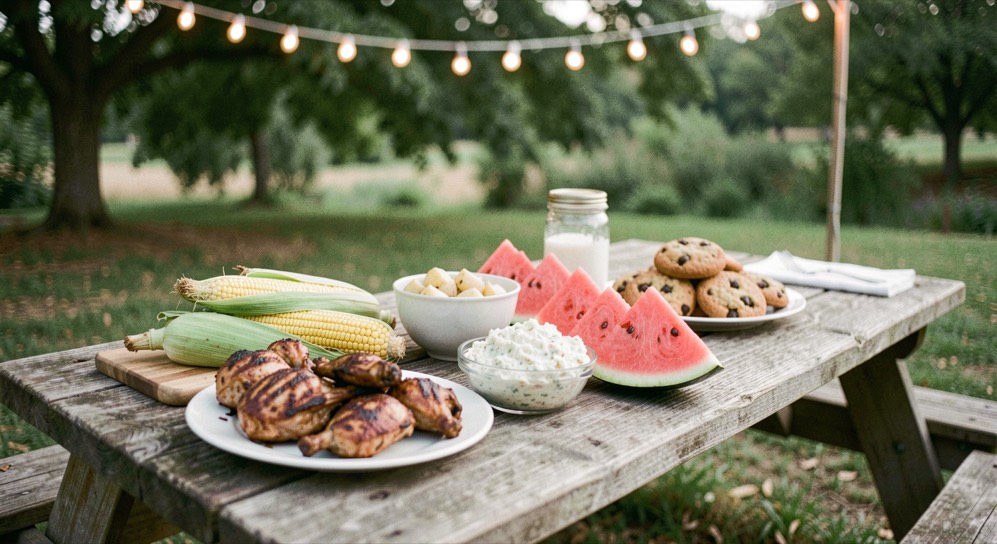
A holiday table does not begin in the kitchen. It begins in a field, a barn or a cold room, and every item on the plate carries a paper trail that records where it came from and who checked it. Reading that trail is the plainest way to understand what the word quality means on a label.
The chain that runs from the field to the packet is called the supply chain, quality, field, product, and it is built step by step: soil and feed, harvest and collection, processing, packaging, transport and sale. Each step leaves a record, and each record can be checked.
How is the quality of a food built along the whole chain?
Quality is not added at the end. It is decided early and then protected. For bread, the chain starts with the wheat variety, the sowing date, the weather during ripening and the moment of harvest. Grain that is cut wet can sprout or grow mold in storage, so moisture is measured before the truck leaves the farm. At the mill, the grain is cleaned, tempered and milled, and the flour is tested for protein, ash and moisture. A bakery then chooses a flour strength that suits its dough, its fermentation time and its oven.
For eggs, the chain starts with the hen, the feed and the housing system. Feed composition shapes the yolk color and the shell strength. Collection, cooling and grading follow within hours, because an egg loses freshness quickly at warm temperatures. The date on the carton is not a marketing line: it is the end of a counted period that begins at laying.
For frozen goods, quality depends on time and temperature more than on any single ingredient. A vegetable frozen within hours of picking keeps more of its structure than one that waited a day. The cold chain, from the field to the cold store to the truck to the shop freezer, is the product. A break of a few degrees is recorded, and that record is what a buyer reads later.
In all three cases the same rule holds: quality is a set of decisions taken at defined points, and each decision is written down. A chain with good records can be audited. A chain without them cannot.
Who controls food safety in Italy, and at which steps?
Food safety in Italy is shared between public authorities and the operators themselves. The Ministry of Health sets the national rules and coordinates the system. The regional health agencies, known as the ASL or Aziende Sanitarie Locali, carry out inspections and sampling at farms, processing plants, markets, restaurants and shops. The Istituto Superiore di Sanità provides the scientific reference for risk assessment. The Carabinieri unit for food protection, the NAS, runs targeted checks on production and retail.
Operators carry the first responsibility. Under European rules, a food business must apply a system based on hazard analysis and critical control points, usually shortened to HACCP. That means identifying the points in a process where something can go wrong, setting a limit, monitoring it and keeping the record. A bakery monitors oven temperature and cooling times. An egg packer monitors storage temperature and candling. A cold store monitors its rooms continuously.
Official controls then verify the records and take samples. A sample of flour can be tested for contaminants, a batch of eggs for salmonella, a frozen product for its declared weight and temperature history. When a problem is found, the traceability system allows the batch to be withdrawn and, if needed, recalled. The key word is traceability: one step back, one step forward, so that any packet can be linked to its supplier and to its buyer.
Which product certifications really matter for bread and eggs?
Certifications fall into a few families, and they answer different questions.
Protected designation labels answer a question of origin and method. In Italy these include DOP, IGP and STG, the European schemes for protected designation of origin, protected geographical indication and traditional specialty guaranteed. A bread or a bakery product with one of these labels must be made in a defined area according to a published specification. The specification is the document that matters, because it lists ingredients, methods and controls.
Organic certification answers a question of farming method. It is regulated at European level, and an organic operator is inspected by a designated control body at least once a year. For eggs, the organic label refers to feed, outdoor access and veterinary rules, not to size or color.
Voluntary quality schemes answer questions set by the industry or by a retailer. A brand may require a certain protein level in flour, a maximum time between laying and packing, or a defined freezing speed. These are private standards, and they are only as strong as the audit behind them.
For a shopper, the practical reading is simple. A label that names a specification, a control body and a place of production can be checked. A label that only says natural or genuine cannot. The date mark, the lot number and the name and address of the operator are the three items that make a packet traceable, and they are the same three items an inspector looks for first.
What does a lot number actually record?
A lot number is a link, not a description. It connects a packet to a production run, and that run to a set of records: the ingredients used, the machines involved, the temperatures logged, the staff on shift and the results of any tests. If a problem appears later, the lot number is what allows a producer to find the affected units without recalling everything.
For bread, the lot often covers a single baking day. For eggs, it covers the packer, the farm and the packing date, which is why the code on the shell and the code on the carton must match. For frozen goods, the lot covers a freezing session, and the temperature record for that session is kept with it.
This is why a recall notice can be so precise. It does not say that a brand is unsafe. It says that a defined lot, from a defined plant, on a defined date, is affected. The rest of the shelf stays where it is.
How a reader can check a holiday table
Start with the packet in hand. Look for the operator name and address, the lot or batch code, the date mark and any certification logo. Then ask what each one records. The date mark records a counted period from production or laying. The lot records a production run. The certification records an inspection against a published specification.
Then look at the cold chain. Frozen goods should be solid, with no soft patches and no ice crystals inside the bag, which suggest a thaw and refreeze. Eggs should be clean and uncracked, and stored cool. Bread should smell of flour and crust, not of the plastic around it.
None of this requires special knowledge. It requires reading the packet as a document, because that is what it is. The field, the barn, the mill, the oven and the freezer are all written there, in a short code and a date, waiting to be read.