Backyard BBQ
What a Bottle's Origin Says at a Summer Table
How the origin printed on a wine or brandy bottle guides a summer table, and where wine brandy parts company with fruit brandy in the glass.
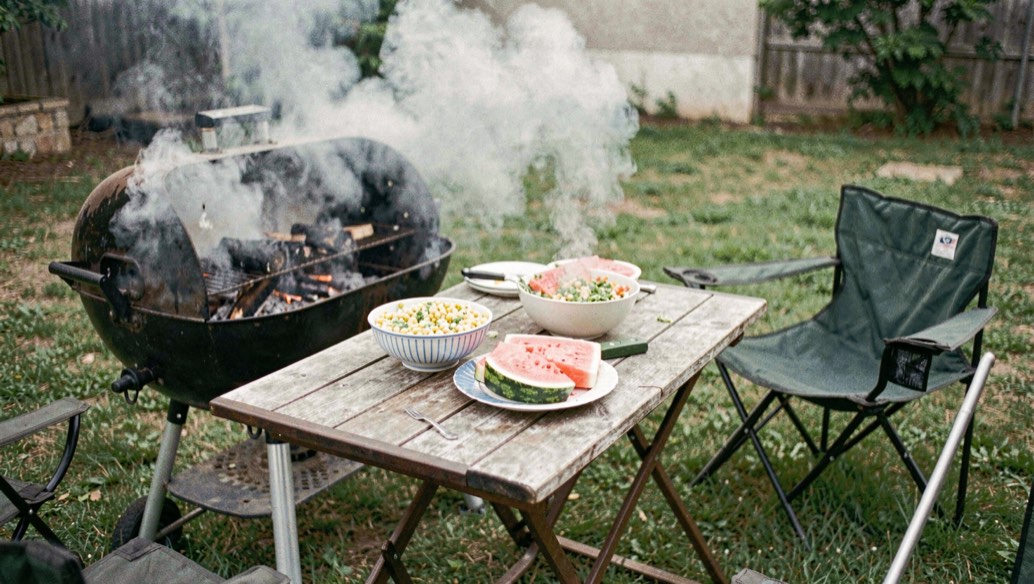
The origin printed on a bottle tells a summer buyer where the fruit was grown, who made the wine or spirit, and what style to expect before the cork is pulled. A region name on a label is a set of promises about climate, grape or fruit, and method, and those promises decide whether the bottle belongs beside grilled corn and tomatoes or after the plates are cleared. Reading that line first, before the price or the picture, is the fastest way to sort a mixed table of guests.
What does the origin on a label actually tell a buyer?
An origin line is not decoration. In the European labeling tradition, a place name on a bottle usually points to a defined growing area, and the rules behind that area describe which varieties may be planted, how ripe the fruit must be, and how the wine or spirit may be handled. A buyer at a summer table can use that to guess weight and acidity before tasting. Cooler, northern origins tend toward higher acidity and lower alcohol; warmer, southern origins tend toward riper fruit and more body. The same logic applies to spirits made from fruit, where the named region often signals which orchards and which varieties fed the still.
German-speaking growers write this information in a compact way, and a reader who does not know the language can still learn the pattern. Publications such as Fass & Feld treat the origin line as the starting point of a conversation about craft, which is a useful habit for anyone standing in a shop in York County with a warm car and a dinner to plan. The label answers three practical questions: where, from what, and by whom. Everything else on the bottle is commentary.
For a summer table, the origin also predicts how the bottle will behave with food. A wine from a cool site with high acidity cuts through mayonnaise-based salads and grilled sausage. A wine from a warm site with lower acidity and more extract sits better with smoked meats and stone fruit. A fruit brandy from a named orchard tends to taste of that orchard, not of a generic spirit, and that difference shows up most clearly when the bottle is served cold and unadorned.
Where wine brandy and fruit brandy part company
The split between wine brandy and fruit brandy begins with the raw material and continues through the still, the barrel, and the glass. Wine brandy is distilled from wine, which means the base is fermented grape juice, and the resulting spirit carries the markers of a grape variety and a vineyard site. Fruit brandy, often called Obstbrand in German-speaking regions, is distilled from fermented fruit, including cherries, plums, pears, and apples, and it carries the markers of an orchard instead of a vineyard.
The practical differences a buyer notices at the table are these. Wine brandy usually spends time in wood, which adds vanilla, toast, and a rounder texture, and it is often bottled at drinking strength after dilution with water. Fruit brandy is more often rested in stainless steel or inert vessels to preserve the fruit aroma, and it is frequently bottled at a higher strength so the perfume survives. Wine brandy tends to taste of dried fruit, spice, and oak; fruit brandy tends to taste of the fresh fruit it came from, sometimes with a faint kernel note from the pits.
Origin labeling reinforces the distinction. A wine brandy named for a region points to vineyards and a house style built over decades. A fruit brandy named for a region points to orchards, harvest dates, and a distiller's habit of fermenting quickly and distilling slowly. Neither is better. They answer different questions at the end of a meal.
How should a summer host choose between them?
A summer host can choose by asking what the bottle is for. If the plan is a long afternoon with grilled food, wine brandy works as a slow sipper after the coals die down, especially when the bottle is served at room temperature in a small glass. If the plan is a short, bright finish to a fruit-heavy meal, fruit brandy works better chilled, in a narrow glass, with no ice and no mixer.
There is also a question of audience. Guests who drink wine regularly tend to read wine brandy quickly, because the vocabulary of acidity, tannin, and oak is already familiar. Guests who do not drink wine often find fruit brandy easier, because the aroma names the fruit directly. A host who wants one bottle for a mixed group can look for a fruit brandy from a named orchard, since it is legible to almost everyone and needs no explanation.
Price is a poor guide here. A modest fruit brandy from a good orchard can outperform an expensive wine brandy at a summer table, and the reverse is also true. The origin line, not the price tag, is the better predictor of whether the bottle will fit the food.
What does the label say about how the bottle was made?
Beyond the place name, the label often hints at method. Words for barrel, steel tank, or bottle aging tell a buyer how much oxygen the spirit or wine met before it was sealed. Wood means oxygen and extraction, which softens harsh edges and adds color. Steel means protection, which keeps fruit aromas sharp. A wine brandy aged in wood will usually be darker and rounder; a fruit brandy kept in steel will usually be clear and direct.
For vinegar and other pantry products, the same logic applies. A balsamic-style vinegar made by a solera system, where older liquid is blended with younger in a stack of barrels, tastes deeper and sweeter than a vinegar made in a single vessel. A buyer who reads the method line can predict whether the bottle is for dressing a tomato salad or for finishing a plate.
Why does this matter in York County?
York County sits in a state with a growing number of small wineries, distilleries, and orchards, and the summer table here mixes local produce with bottles from elsewhere. Knowing how to read an origin line lets a buyer support a nearby orchard or vineyard with confidence, and it also lets a buyer compare a local bottle with an imported one on equal terms. The label is the same document in both cases.
The habit is simple. Read the origin first. Read the method second. Read the price last. Then decide whether the bottle belongs in the cooler for the afternoon or on the counter for the evening. A summer table rewards that order of reading more than any single recommendation.
A final note for hosts who plan ahead: buy the fruit brandy early and keep it cold, and buy the wine brandy late and keep it out of the sun. Both will taste more like their origin that way, which is the whole point of the line printed on the glass.